Zyxel GS-105B v2 in a 10-inch rack
Zyxel GS-105B v2 in a 10-inch rack: five unmanaged Gigabit ports on the rear, 3.5 W max from a 9 V adapter, flat on the hex shelf in 1U.
 Mira Voss@nullroute5 min read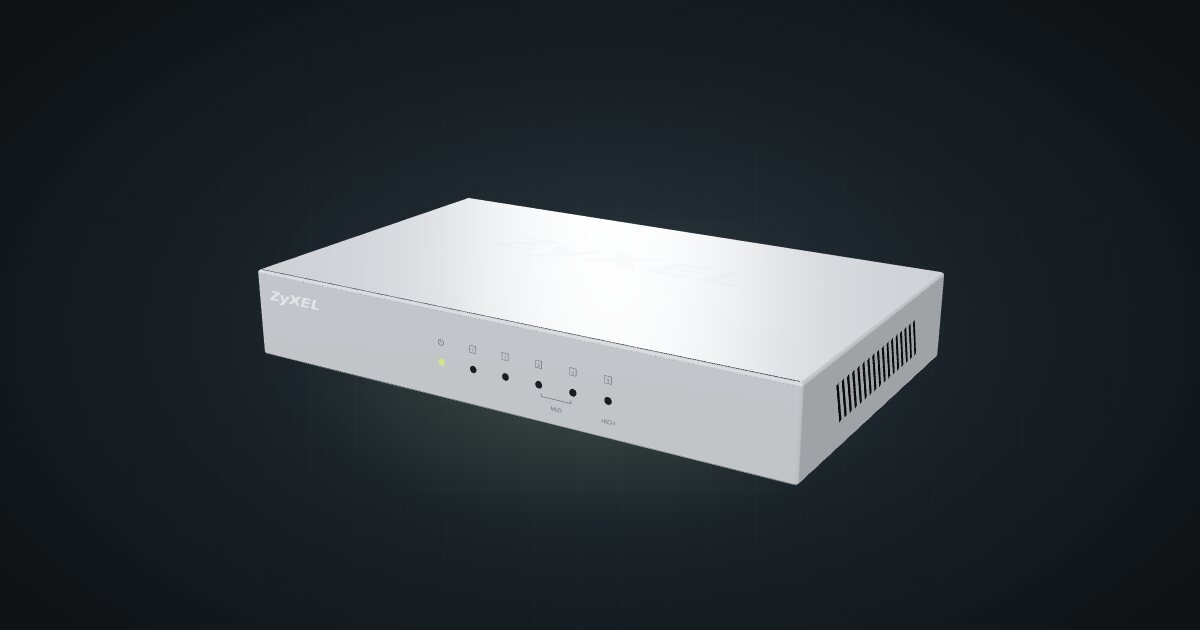
On this page
The Zyxel GS-105B v2 is a five-port unmanaged Gigabit switch in a fanless metal case: nothing to configure, 3.5 W at most. Unlike most desktop switches, it puts its ports and power jack on the back and its LEDs on the front, and that changes how you cable it in a rack. It suits a small, set-and-forget rack with a short device list.
At a glance
| Ports | 5 × Gigabit RJ45, auto MDI/MDIX, all on the rear |
| Management | Unmanaged (plug-and-play), with loop detection |
| Priority ports | Port 5 high, ports 3–4 medium |
| Switching capacity | 10 Gbps |
| Power | External adapter, 9 V DC / 0.6 A; 3.5 W max |
| Size and weight | 164 × 98 × 26 mm, 369 g, metal housing |
| Operating temperature | 0 to 40 °C |
The figures are for hardware v2, which shares its 164 × 98 × 26 mm chassis with the GS-108B v2. The v1 and v3 GS-105B are 121 × 75 × 26 mm, so check the label on your unit before you plan around these numbers.
Where it fits in a mini rack
Five ports cover a modest rack: an uplink to the router plus four devices, say a mini PC, a NAS, a single-board computer and a KVM. With no settings to manage, it suits a rack you build once and then leave alone, or a second rack that hangs off a main switch elsewhere.
The extras are small but useful. Port 5 is a high-priority port and ports 3–4 are medium priority, so a voice line or the machine that cannot stutter gets the best seat without any configuration. Loop detection catches the patch cable that accidentally joins two ports, a real risk once a rack has a keystone row. It supports IEEE 802.3az Energy Efficient Ethernet and 9 KB jumbo frames, and its 2K-entry MAC table is far more than a mini rack can fill.
What it is not: a managed switch. There are no VLANs, no PoE and nothing faster than Gigabit. Traffic separation has to happen on the router or a managed switch upstream.
How it fits a 10-inch rack
The v2 chassis is wide for five ports but low, and the configurator checks it against every rack:
There is no dedicated mount for the GS-105B v2 in the catalogue. The 10i hex shelf takes it flat in 1U or upright in 4U, both at 154 mm deep, and both fit all six RackMate frames, from the 200 mm deep T0 and T1 to the 260 mm Plus frames and the T2. Nothing is blocked.
Flat in 1U is the placement to use. The LED plate faces the front, so link lights stay visible, and the ports face the back. Upright spends four units on a five-port switch.
A community mount also exists: the Zyxel GS105B v2 / GS108B 1U rack mount on MakerWorld, a 1U bracket drawn for the v2 chassis. It is not in the configurator yet, so the fit check above does not cover it.
Printed brackets are cut for one chassis. This one suits the 164 × 98 mm v2 body, but the v1 and v3 GS-105B are 121 × 75 mm and the GS-108B v3 is 155 × 85 mm. Check the hardware version a mount was made for before printing.
Power
Zyxel’s v2 specification lists 3.5 W as the maximum, and the catalogue budgets that figure. Idle draw is not published; it falls with fewer active links thanks to 802.3az. The external adapter is rated 9 V DC / 0.6 A on a 100–240 V AC input, which is a supply rating, not the switch’s draw.
For rack power planning the switch itself is a rounding error. The adapter is the real cost: one more brick on the strip behind the rack. Its jack is on the rear plate, so the power lead never crosses to the front.
Networking and cabling
All five Gigabit ports sit on the rear plate: port 5 framed apart, then ports 4 to 1 and the 9 V DC jack. Rear ports mean rear keystones:
- Patch each switch port you use to the rear socket of a keystone coupler. The keystone’s front socket presents that port at the front, where short patches reach devices with front-facing Ethernet.
- A device whose port also faces the rear gets its own rear keystone, and a short front patch joins its keystone to the switch’s keystone.
- Never route a cable around the outside of the rack to reach the switch.
Count keystones before you plan the panel: one per switch port in use, plus one per device whose Ethernet faces the rear.
How it differs from the GS-108B v3
The GS-108B v3 is the eight-port model of the same line, and the newer hardware is the smaller box:
- Ports. 8 × Gigabit against five, with ports 7–8 high priority and 5–6 medium.
- Capacity. 16 Gbps of switching capacity and a 4K-entry MAC table, against 10 Gbps and 2K here. Both support 9 KB jumbo frames and 802.3az; the v2 specification also lists loop detection.
- Power. A 5 V DC / 1 A adapter and 3.0 W max, against 9 V DC / 0.6 A and 3.5 W for the GS-105B v2.
- Size. 155 × 85 × 26 mm and 325 g, against 164 × 98 × 26 mm and 369 g.
- Rack fit. Identical in the catalogue: flat in 1U or upright in 4U on the hex shelf. Both put their ports on the rear.
If you might outgrow five ports, the GS-108B v3 costs no extra rack space.
Full specifications
Plan it
Open the Zyxel GS-105B v2 in the catalogue to place it on a hex shelf and lay out its rear keystones. No community build uses it yet.
For the eight-port sibling, read the Zyxel GS-108B v3 guide. For a five-port switch with front-facing ports, see the NETGEAR GS105 guide.
Sources
Related guides
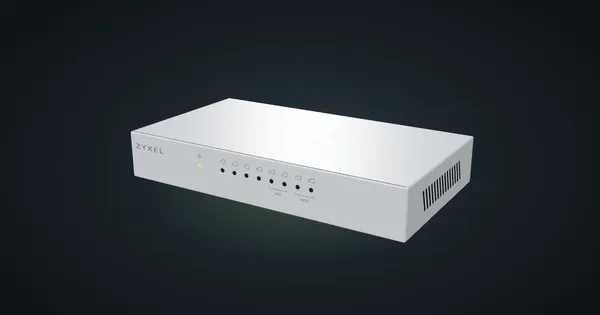
Zyxel GS-108B v3 in a 10-inch rack
Zyxel GS-108B v3 in a 10-inch rack: eight unmanaged Gigabit ports on the rear, 3.0 W max from a 5 V adapter, flat on the hex shelf in 1U.
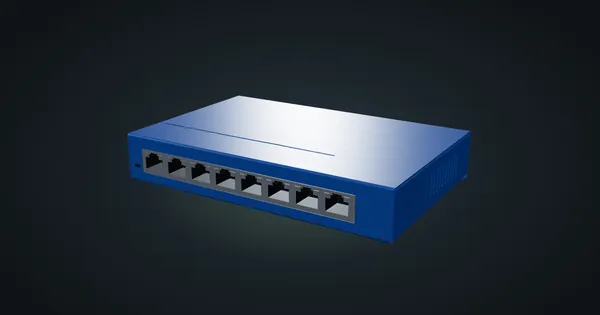
NETGEAR GS108 v4 in a 10-inch rack
NETGEAR GS108 v4 in a 10-inch rack: eight unmanaged Gigabit ports, 4.9 W maximum draw, two 1U community mounts and front-only cabling.

Protectli Vault FW6A in a 10-inch rack
Protectli Vault FW6A in a 10-inch rack: a fanless six-port Gigabit firewall in a 2U carrier with five keystones, or flat on the hex shelf.